Savannah & the Low Country
LAWN MAINTENANCE
IN SAVANNAH
Keep your lawn looking its best year-round. We handle mowing, edging, trimming, blowing, fertilizing, and seasonal cleanup on a schedule that works for you.
WHAT LAWN MAINTENANCE INVOLVES
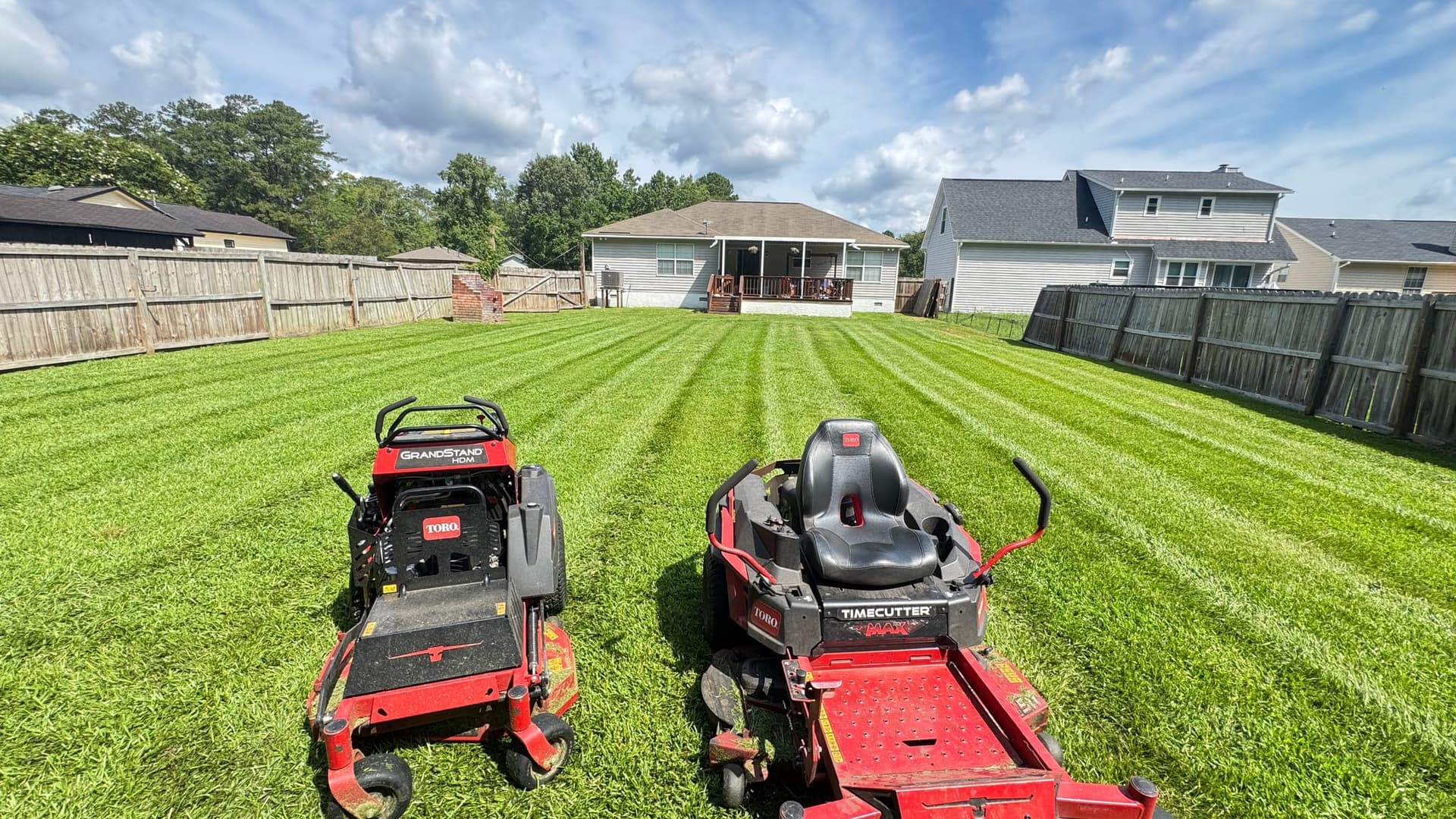
Lawn maintenance is the work that keeps a yard consistent rather than rescued. On a regular visit that means mowing at the height your grass actually wants, edging the hard lines along drives and walks, trimming what the mower cannot reach, and clearing clippings off paving before we leave. What varies is frequency and season. Warm-season grasses here (centipede, St. Augustine, Bermuda, zoysia) grow hard from late spring through early fall and want weekly attention; they slow through autumn and go dormant after the first frost, when the work turns to leaves, edging and keeping beds tidy. Cutting height matters more than most people expect, because each of those grasses tolerates something different, and one deck setting across a mixed lawn is how yards end up scalped in one spot and shaggy in another. Tell us what you have and we will set the schedule around it.
WHAT'S INCLUDED
Weekly, biweekly, and monthly plans available
Mowing, edging, trimming, blowing, and cleanup included
Fertilizer and weed treatment programs
Residential, commercial, and HOA properties
Flexible scheduling around your property
Free quotes with no obligation
WHERE WE OFFER IT
Conditions change across the Low Country: soil, shade, salt and drainage all differ from one area to the next. Pick your area for what we run into locally.
COMMON QUESTIONS
How often does a lawn need to be mowed in the Savannah area?
From May through September, warm-season grasses here grow fast enough that weekly is the right interval. In a hot, rainy stretch even seven days can look long. Spring and fall usually hold at every other week. Once the grass goes dormant after the first frost, mowing nearly stops and the work shifts to leaves, edging and cleanup. Cutting more than a third of the blade at once stresses the lawn, which is why skipping weeks in summer tends to backfire.
What does lawn maintenance cost around Savannah, and what drives the price?
Price comes down to how much turf there actually is, not the lot size on paper: a half acre that's mostly woods cuts faster than a small yard full of beds, trees and fence line. Obstacles, gates, slopes and soggy low spots all add time. Frequency matters too: weekly visits cost less per stop than monthly ones, since overgrown grass takes longer to get through. Tell us roughly what the property looks like at (912) 455-5073 and we can work from there.
Do you still cut grass in the winter in coastal Georgia?
Centipede, St. Augustine, Bermuda and zoysia all go dormant after the first frost, usually in November or December, and mowing mostly stops until green-up in spring. Winter visits shift to leaf cleanup, edging and keeping beds tidy, and late winter stays busy, because live oaks drop their old leaves and catkins through February and March. Hold fertilizer until the lawn is fully green, generally mid-spring; feeding dormant grass mainly feeds the weeds.
Does it matter which type of grass I have?
It sets the mowing height, which is the biggest single factor in how a lawn holds up here. St. Augustine wants to be cut high, around three to four inches, so it shades out weeds and tolerates live oak shade. Centipede runs lower and is easily damaged by too much fertilizer. Bermuda takes full sun and frequent cutting. Zoysia is dense and slower. Cutting everything at one height is how lawns get scalped, so we set the deck to what you actually have.
What happens if it rains on my scheduled day?
Afternoon thunderstorms are a given here all summer, so a wet day usually means moving your visit rather than skipping it, and we'll be in touch about the new day. We won't mow saturated ground: equipment on wet coastal soil leaves ruts and tears the turf up. Ground under heavy shade can stay soft a day or two longer than the open parts of the same yard, which is often what pushes a visit rather than the rain itself.
Other services we offer
Get a Free Quote